Restoration of the Year
Read More0 Comments
Steve has been riding motorcycles since he was 7 years old . A diesel mechanic by trade and doing all repairs to the bikes on his own. Currently owns 2 Moto Guzzi's, 1 Ducati, 1 Suzuki, and a Yamaha dirt bike. Steve is waiting to retire so he can spend more time riding
Myself and Angela moved from Darwin to Cairns at the end of 2024 to get cooler weather once we retired. We bought a property in Goldsbough, which has a little shed where I'm in the process of restoring a 1974 Ducati Desmo 450 which had been sitting in a shed at Humpty-Doo for 30 Plus years. Current ride is a 2021 Yamaha Tenere 700 and I have just acquired a BMW R80RT 1985.
Kev is originally from Yorkshire UK and has been in Australia since 1980. He is interested in all old and modern motorcycles and been with the club for 3 years . He is looking forward to helping the club move forward
Eddie is the proud owner of a 750 Norton Commando roadster and a couple of Triumphs, has has been riding bikes for the last 42 years.
Jurg has been riding motorcycles for over 45 years . Currently rides a '74 BMW R90/6, a '01 BMW R1100S and a '17 BMW R1200GS as well as a Royal Enfield Scram 411. Previously had several other BMW's, Moto Guzzi, Ducati, Honda, Yamaha, Condor, Lambretta and Vespa.
Show Off Your Hard Work – Restoration of the Year! Have you recently brought a classic back to life or finished a major overhaul in the shed? We want to see it! Send through photos and a brief rundown of your project—the challenges, the triumphs, and the finished result. All submitted bikes will be in the running for our prestigious Restoration of the Year award, announced at the end of the year. Email your photos and story to webmaster@cmrc.org.au and let the rest of the club admire your handiwork.
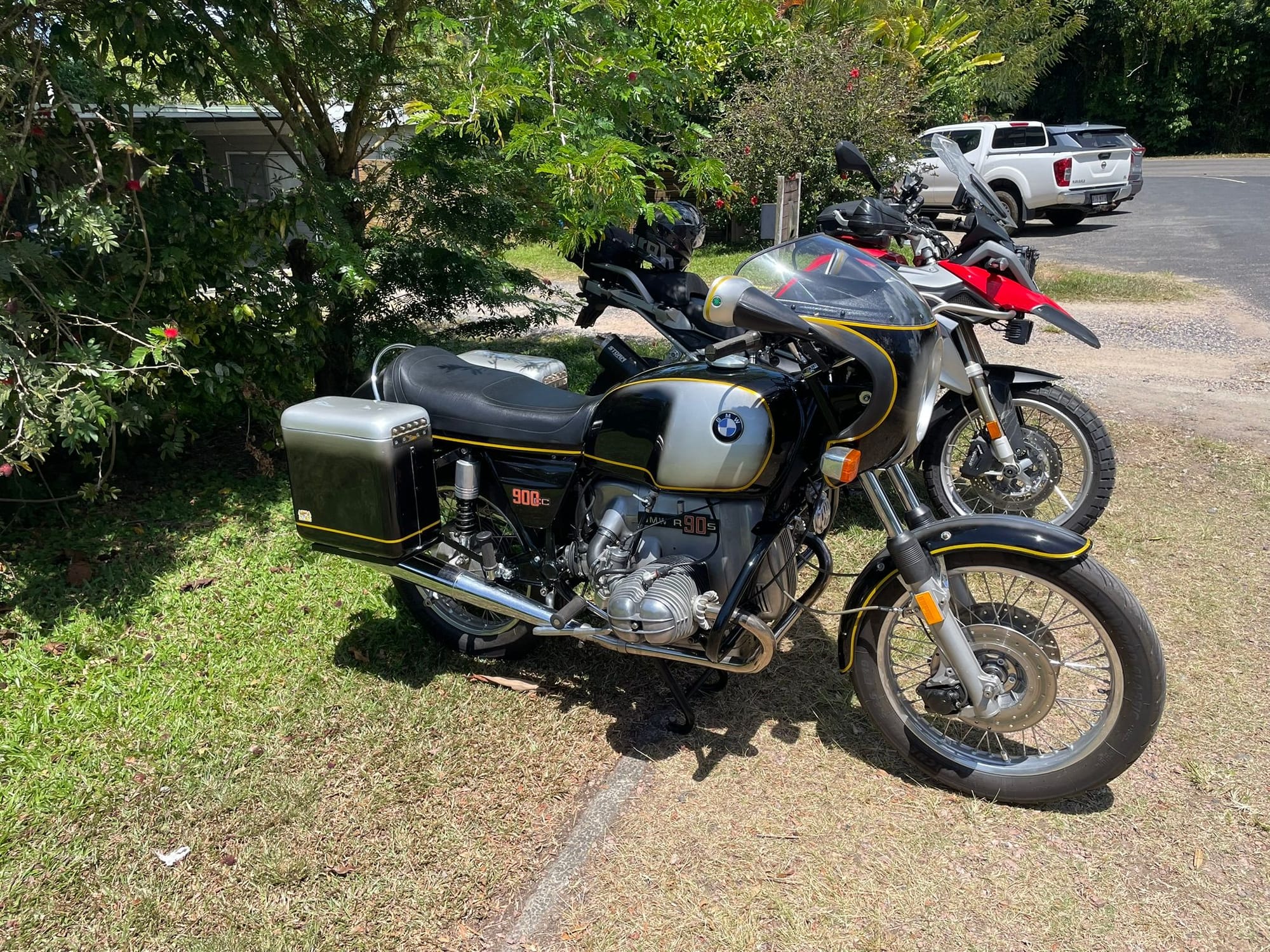
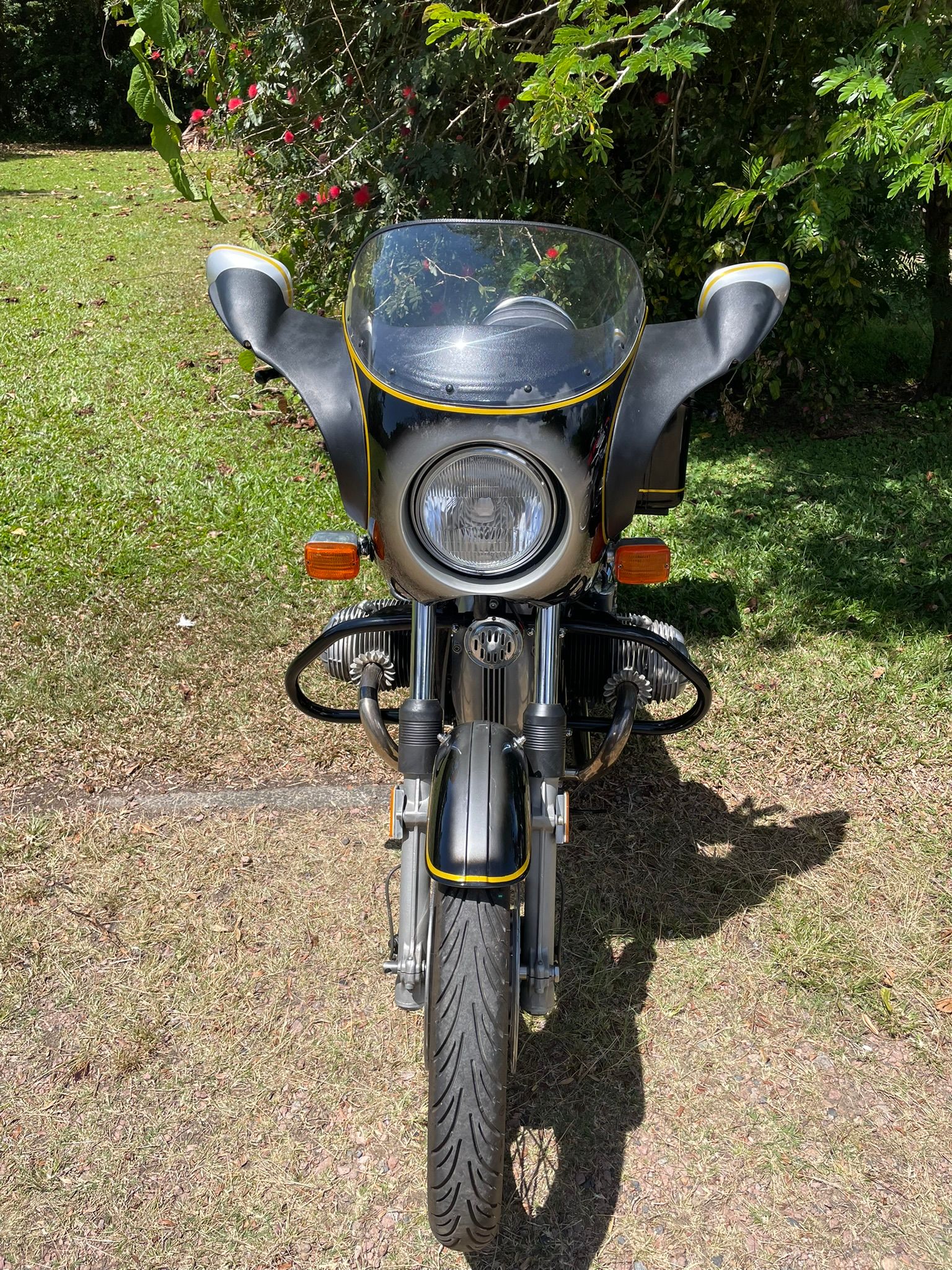
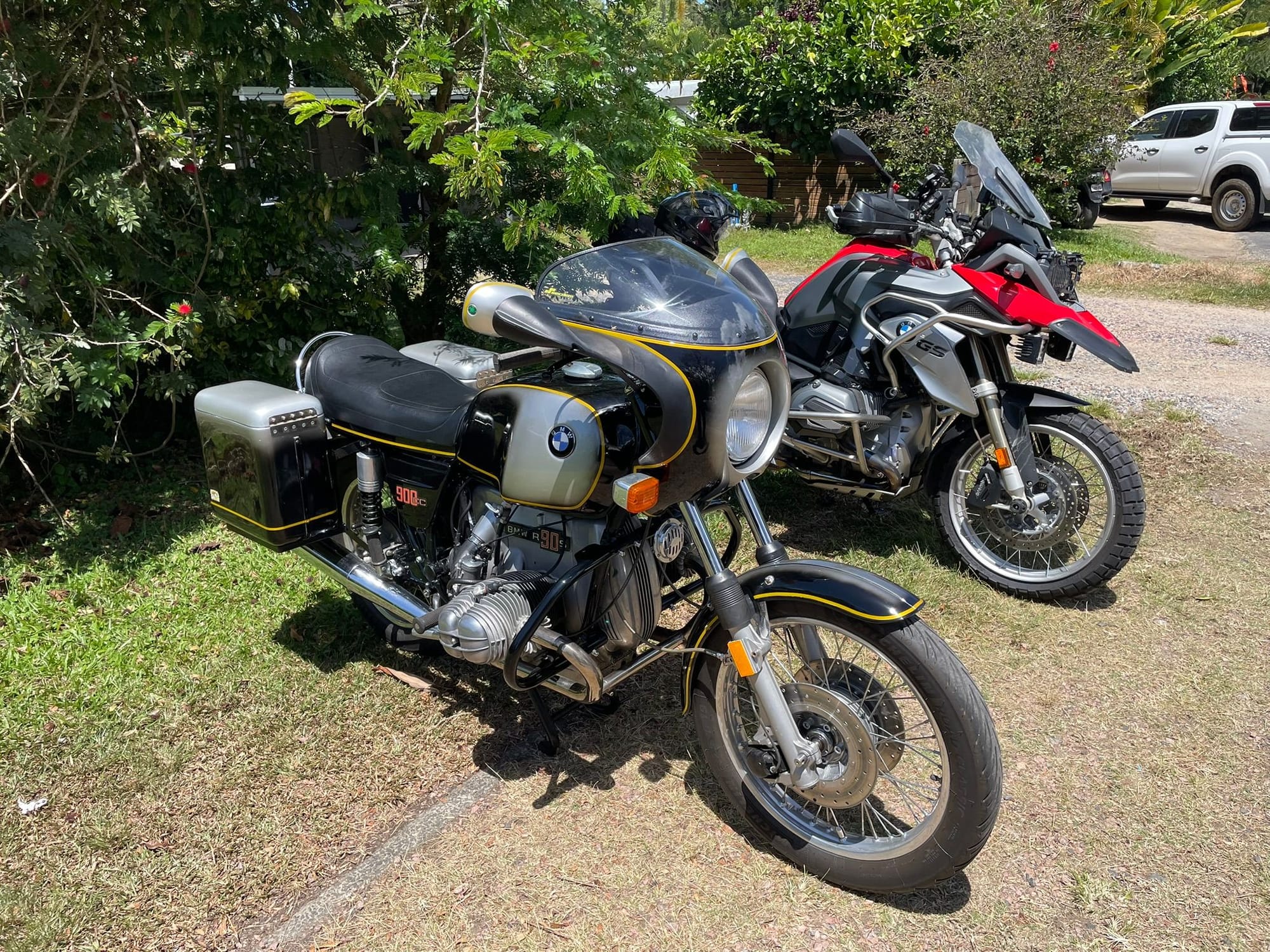
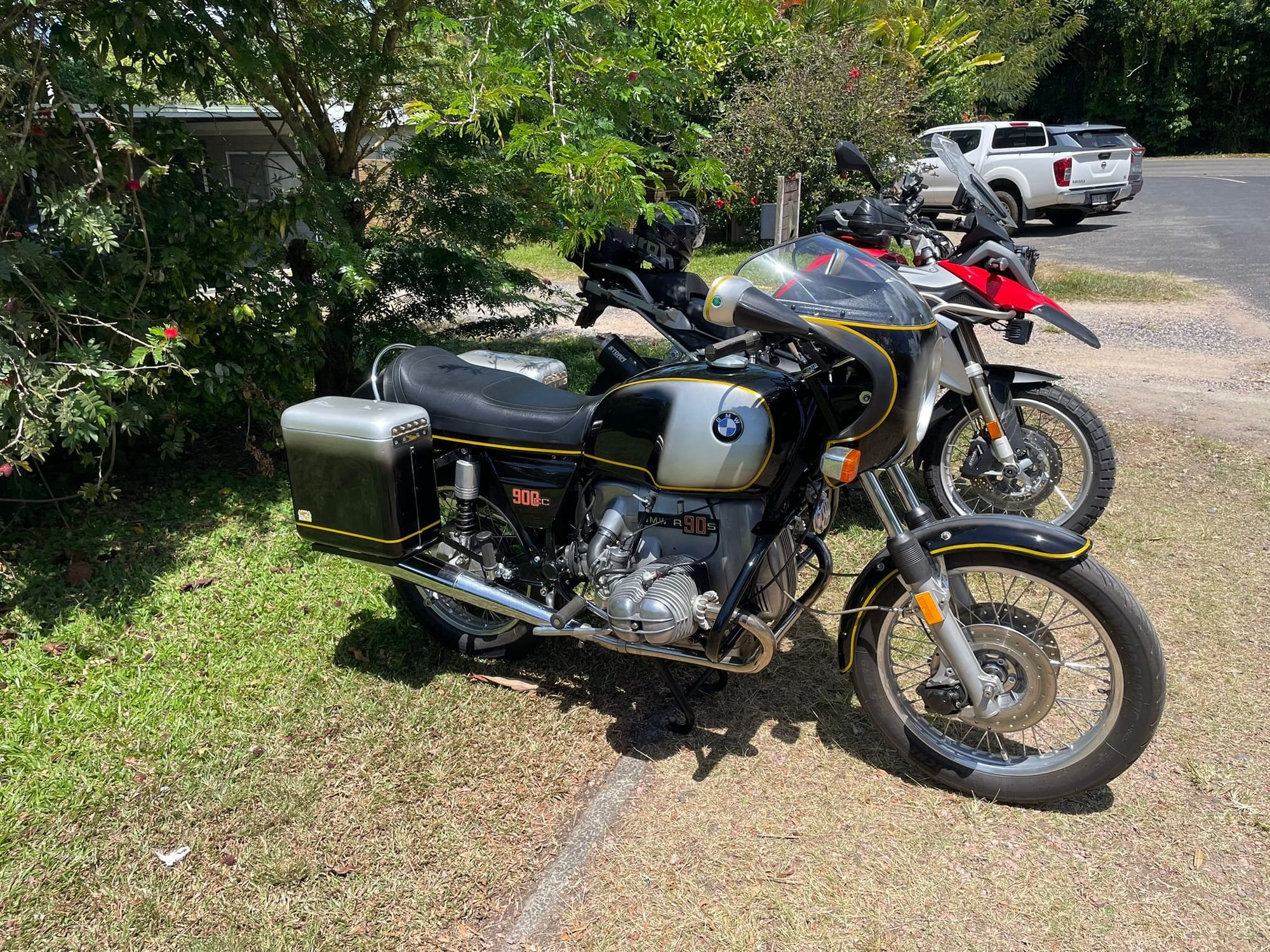
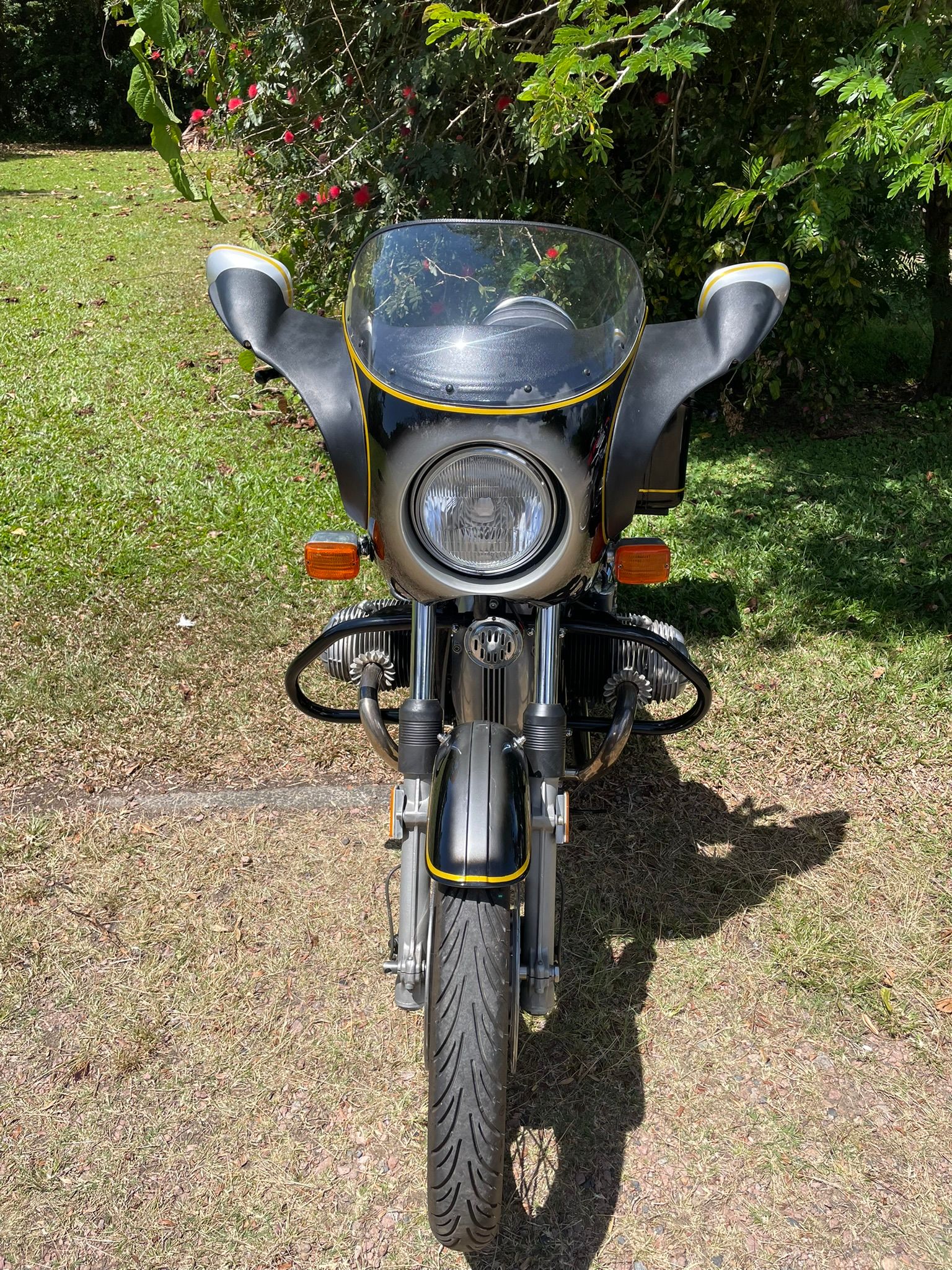
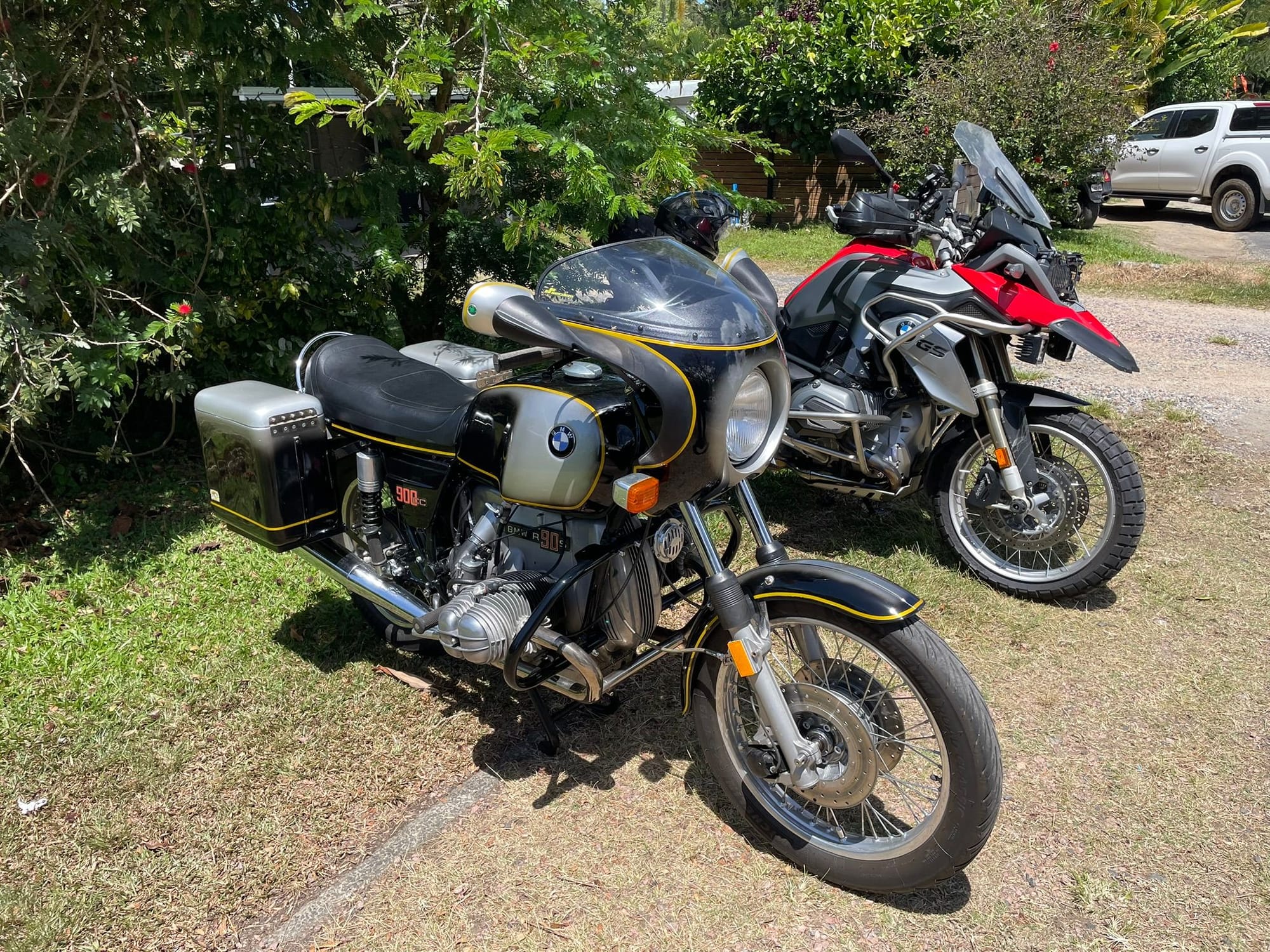
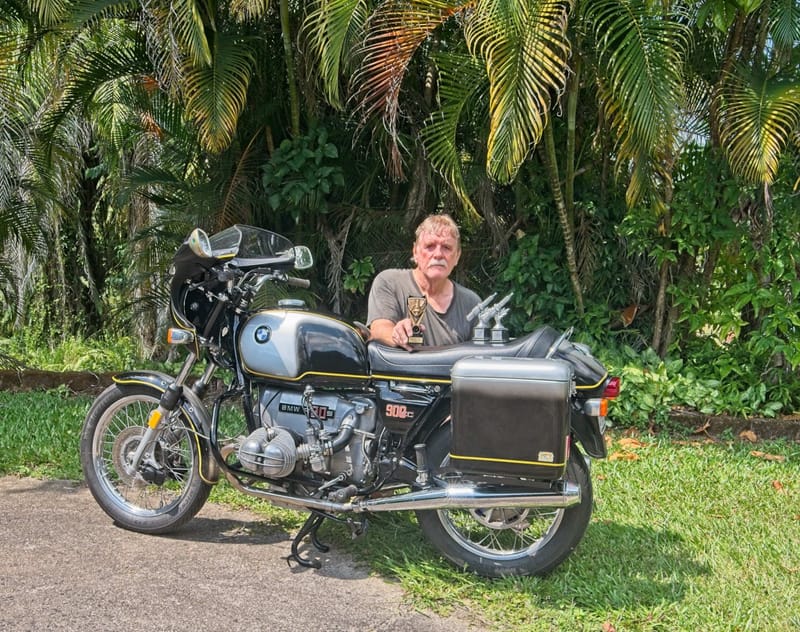
About ten years ago club member Don Roy mentioned to me that he had aBMW R90S in pieces in his shed, and one day he would rebuild it. My immediate reply was if he ever wanted to sell it, could I please be his firstphone call. Like a lot of BMW enthusiasts, I wanted an R90S so bad when it hit the market back in 1974, but not at that price. When Don got the bike it had not run for more than 25 years and had spent along time after being in a crash, laying on its side in the mud under a house inSydney, so it was in a bit of a state. For some very peculiar reason the poorthing had also been painted with yellow house paint ????????? Fast forward about ten years, and out of the blue I got a call from Don, and didI still want to buy it. A deal was done with regard to the work Don had alreadydone on it, and he had already bought quite a few new parts and cylindersfrom Germany. We managed to load the entire R90S into my wagon, and home to the shed to start the job of putting it back on to its former glory. First job was to assemble the basic frame, which Don had already painted. Next was the long job of sorting what parts I had and what was missing. After a serious hit to the credit card and endless freight delays. I figured I had almost every thing needed to complete the rebuild. A big job was making a complete wiring loom from some of the bits I had andmodifying the ignition system to a new electronic system, which has made amajor difference to the way the bike starts and runs. Next was repairs to two fuel tanks at the same time, one for the R90S and another for another club member. When I fitted the differential and drive shaft I discovered that the rear frame was slightly bent, probably as a result of the crash years ago. So I pulled it apart again, and the frame into the press to gently align it back to the rightposition. I had talked to Don about the rebuild and we agreed that the bike would remain mostly original, with only safety or common-sense modifications incorporated. So, the ignition was changed along with LED head light, drilled brake disks and three relays in the wiring loom to remove the high amperageitems from drawing current through the handle bar switches (old Lucas and Triumph thinking) and fitting an extended oil sump. After a lot of work, I got to the stage of running the engine, which opened a can of worms. As anyone who has done restorations knows full well, it’s mostly two steps forward and one back. The started motor had locked up and needed a rebuild. Once the engine started, I had a horrible noise from the gearbox,which meant it had to come out and be pulled apart. The noise had come fromshaft shims which I assume had fallen out during a previous assembly. These shims had met a horrible fate in the gears, but luckily the gears were not damaged. After measuring and fitting new shims in the gearbox, it ran smooth and quiet. I and a lot of other BMW restorers, have also discovered that new replacement brake and speedo cables do not fit, they have over the years become shorter as each new lot are made. A bit of work on the lathe solved the problems. After discussions with several club member with bikes fitted with the original imperial wheel rims, I found there is not a lot of choice in brand. A lot of webtime, led to me discovering that Michelan are now onto the restorationmarket, and produce brand new original imperial size tyre with a moderncompound to suit. Then over a couple of months, there was a lot of running the engine, gearboxand differential while on the bike lift and endless checks of oil pressure, clutchand electrics (no smoke) and a pair of Delortos with leaks. Once I was satisfied that the basic bike mechanics were finished, it was onto the very big job of preparing all the tank, mudguards, side covers, fairing etc for paint. The insideof the fuel tank had some of the original sealant flaking off, and needed repair. I washed it out with boiling water and detergent, then a phosphoric acid wash and a second lot hot water. The tank was then finished inside with two coats of epoxy polymide primer, nothing is going to effect the inside of that tank again. Of course, the original 1974 Silver Smoke paint scheme would be retained,even though it was tempting to go with the very popular Daytona Orange. Another couple of months removing many dents, scratches and cracks, and I finally had a surface ready for several coats of high build primer. Down to the paint shop for the three base coats colours and clear coat, with original paint code in hand. As I suspected, and the subject of endless key board experts in forums, I was told the original codes are basically useless due them being referenced to what are now 50 plus year old tinters. The paint shop was very helpful, making a few calls for me to Melbourne suppliers and we had some modern colours to work with. Into the booth and paint the bike, and I found out just how difficult the smoke paint job really is. The addition of the Talbort/Berlin mirrors to the fairing, making the pin striping more frustrating and time consuming. Finally, time to reassemble the bike, and start some test riding. This revealed that the brakes had to be bled again (one step forward, one step back). I was a bit concerned as the master cylinder had been to Knight Brakes in Cairns andfitted with a stainless steel sleeve. Lots of bleeding fluid and eventually thesystem had the correct pressure on the brake lever but still poor brakes. This bike has adjustable brake callipers, and it turned out a little adjustment was all that was need to have brakes working correctly. After more running up and down the drive, it was ready to go to road worthy inspection, and thanks to Grahame’s advice, it’s now on the road with club registration. This entire restoration was made much easier with advice and knowledge from fellow club members, who have “been there done that”. Thank you.
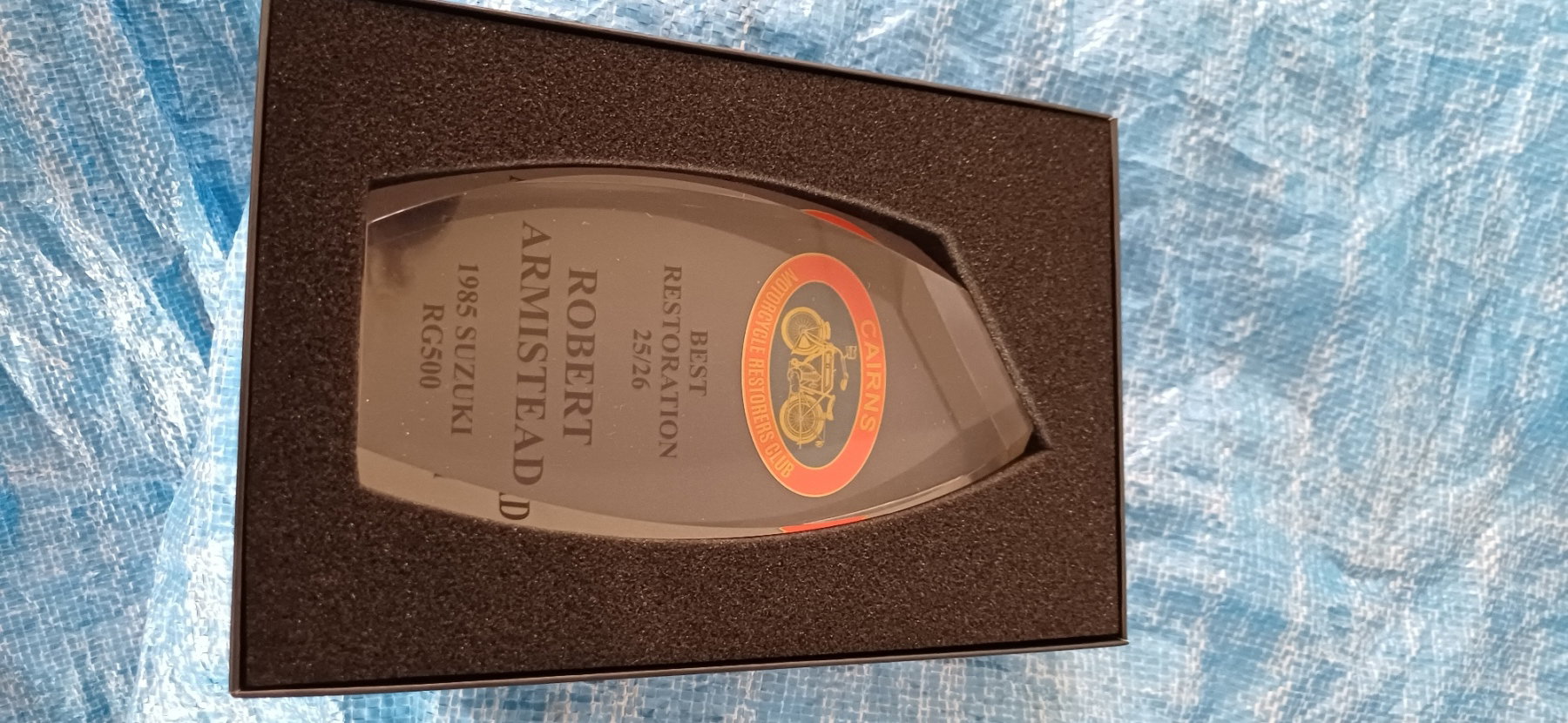
The restoration of Jim's BMW R90S which won the price for the best restoration in 2025
Read MoreMy first three restorations were mid 80's Yamaha XJ900's, my restoration philosophy is to restore them to to look and perform better than new and this has followed on to my latest 1981 Honda CX500B Deluxe
Read MoreAs some of you are aware, I love Suzuki Katanas. I’m talking about the original Katanas that ran between 1981-1982.....
Read MoreCairns Motorcycle Restorers Club Inc. IA36694 (“the Club”, “we”, “our”, or “us”) is committed to protecting your privacy and managing personal information in accordance with the Privacy Act 1988 (Cth) and the Australian Privacy Principles (APPs). This Privacy Policy explains how we collect, use, store, disclose, and protect your personal information.
We may collect personal information including: - Full name - Residential or postal address - Email address - Phone number - Date of birth - Emergency contact details - Motorcycle details (make, model, registration) - Licence confirmation (not copies unless required) - Photographs or videos taken at Club events - Payment records (membership fees) We only collect personal information that is reasonably necessary for our functions as a motorcycle club and incorporated association.
We collect personal information: - Directly from you via membership forms (paper or online) - Through annual renewals - Via event registrations - Through email or website contact forms - When photos or video are taken at Club activities We generally collect personal information directly from you unless it is unreasonable or impracticable to do so.
We collect personal information for purposes including: - Processing membership applications and renewals - Maintaining a member register (as required under Queensland incorporated association law) - Organising rides and Club events - Communicating with members - Managing safety and emergencies - Meeting legal and insurance obligations - Promoting the Club through newsletters, website, and social media We will not use or disclose your personal information for purposes unrelated to the Club without your consent, unless required or authorised by law.
We may disclose personal information to: - Committee members for administrative purposes - Ride coordinators for safety purposes - Insurers where required - Professional advisers (e.g., accountants, legal advisers) - Government authorities if required by law We do not sell or rent personal information to third parties. If we use third-party service providers (e.g., website hosting, email platforms), your information may be stored on secure servers managed by those providers.
Our website may use cookies or analytics tools to improve functionality and understand visitor usage. These tools may collect non-identifiable information such as: - Browser type - Device information - Pages visited - Time spent on the site You can adjust your browser settings to refuse cookies if you prefer.
We take reasonable steps to protect personal information from misuse, interference, loss, unauthorised access, modification, or disclosure. Security measures may include: - Secure storage of paper records - Password-protected digital files - Restricted access to committee members - Secure cloud storage providers When personal information is no longer required, we take reasonable steps to destroy or de-identify it, unless we are required by law to retain it.
You may request access to the personal information we hold about you and request correction if it is inaccurate, out of date, incomplete, or misleading. Requests should be made in writing to the Club Secretary. We will respond within a reasonable time. We may decline access in limited circumstances permitted by the Privacy Act.
Photos and videos taken at Club events may be used for: - Website content - Social media - Newsletters - Promotional materials Members may opt out of media use by notifying the Club in writing.
If you believe we have breached the Australian Privacy Principles, you may lodge a complaint by contacting the Club Secretary. We will investigate and respond within a reasonable timeframe. If you are not satisfied with our response, you may contact the Office of the Australian Information Commissioner (OAIC).
If you believe we have breached the Australian Privacy Principles, you may lodge a complaint by contacting the Club Secretary. We will investigate and respond within a reasonable timeframe. If you are not satisfied with our response, you may contact the Office of the Australian Information Commissioner (OAIC).
We may update this Privacy Policy from time to time. The current version will be published on our website with the updated date.
Show Off Your Hard Work – Restoration of the Year! Have you recently brought a classic back to life or finished a major overhaul in the shed? We want to see it! Send through photos and a brief rundown of your project—the challenges, the triumphs, and the finished result. All submitted bikes will be in the running for our prestigious Restoration of the Year award, announced at the end of the year. Email your photos and story to webmaster@cmrc.org.au and let the rest of the club admire your handiwork.
About ten years ago club member Don Roy mentioned to me that he had aBMW R90S in pieces in his shed, and one day he would rebuild it. My immediate reply was if he ever wanted to sell it, could I please be his firstphone call. Like a lot of BMW enthusiasts, I wanted an R90S so bad when it hit the market back in 1974, but not at that price. When Don got the bike it had not run for more than 25 years and had spent along time after being in a crash, laying on its side in the mud under a house inSydney, so it was in a bit of a state. For some very peculiar reason the poorthing had also been painted with yellow house paint ????????? Fast forward about ten years, and out of the blue I got a call from Don, and didI still want to buy it. A deal was done with regard to the work Don had alreadydone on it, and he had already bought quite a few new parts and cylindersfrom Germany. We managed to load the entire R90S into my wagon, and home to the shed to start the job of putting it back on to its former glory. First job was to assemble the basic frame, which Don had already painted. Next was the long job of sorting what parts I had and what was missing. After a serious hit to the credit card and endless freight delays. I figured I had almost every thing needed to complete the rebuild. A big job was making a complete wiring loom from some of the bits I had andmodifying the ignition system to a new electronic system, which has made amajor difference to the way the bike starts and runs. Next was repairs to two fuel tanks at the same time, one for the R90S and another for another club member. When I fitted the differential and drive shaft I discovered that the rear frame was slightly bent, probably as a result of the crash years ago. So I pulled it apart again, and the frame into the press to gently align it back to the rightposition. I had talked to Don about the rebuild and we agreed that the bike would remain mostly original, with only safety or common-sense modifications incorporated. So, the ignition was changed along with LED head light, drilled brake disks and three relays in the wiring loom to remove the high amperageitems from drawing current through the handle bar switches (old Lucas and Triumph thinking) and fitting an extended oil sump. After a lot of work, I got to the stage of running the engine, which opened a can of worms. As anyone who has done restorations knows full well, it’s mostly two steps forward and one back. The started motor had locked up and needed a rebuild. Once the engine started, I had a horrible noise from the gearbox,which meant it had to come out and be pulled apart. The noise had come fromshaft shims which I assume had fallen out during a previous assembly. These shims had met a horrible fate in the gears, but luckily the gears were not damaged. After measuring and fitting new shims in the gearbox, it ran smooth and quiet. I and a lot of other BMW restorers, have also discovered that new replacement brake and speedo cables do not fit, they have over the years become shorter as each new lot are made. A bit of work on the lathe solved the problems. After discussions with several club member with bikes fitted with the original imperial wheel rims, I found there is not a lot of choice in brand. A lot of webtime, led to me discovering that Michelan are now onto the restorationmarket, and produce brand new original imperial size tyre with a moderncompound to suit. Then over a couple of months, there was a lot of running the engine, gearboxand differential while on the bike lift and endless checks of oil pressure, clutchand electrics (no smoke) and a pair of Delortos with leaks. Once I was satisfied that the basic bike mechanics were finished, it was onto the very big job of preparing all the tank, mudguards, side covers, fairing etc for paint. The insideof the fuel tank had some of the original sealant flaking off, and needed repair. I washed it out with boiling water and detergent, then a phosphoric acid wash and a second lot hot water. The tank was then finished inside with two coats of epoxy polymide primer, nothing is going to effect the inside of that tank again. Of course, the original 1974 Silver Smoke paint scheme would be retained,even though it was tempting to go with the very popular Daytona Orange. Another couple of months removing many dents, scratches and cracks, and I finally had a surface ready for several coats of high build primer. Down to the paint shop for the three base coats colours and clear coat, with original paint code in hand. As I suspected, and the subject of endless key board experts in forums, I was told the original codes are basically useless due them being referenced to what are now 50 plus year old tinters. The paint shop was very helpful, making a few calls for me to Melbourne suppliers and we had some modern colours to work with. Into the booth and paint the bike, and I found out just how difficult the smoke paint job really is. The addition of the Talbort/Berlin mirrors to the fairing, making the pin striping more frustrating and time consuming. Finally, time to reassemble the bike, and start some test riding. This revealed that the brakes had to be bled again (one step forward, one step back). I was a bit concerned as the master cylinder had been to Knight Brakes in Cairns andfitted with a stainless steel sleeve. Lots of bleeding fluid and eventually thesystem had the correct pressure on the brake lever but still poor brakes. This bike has adjustable brake callipers, and it turned out a little adjustment was all that was need to have brakes working correctly. After more running up and down the drive, it was ready to go to road worthy inspection, and thanks to Grahame’s advice, it’s now on the road with club registration. This entire restoration was made much easier with advice and knowledge from fellow club members, who have “been there done that”. Thank you.